Getting Online in Hakone: SIM, eSIM and Pocket Wi-Fi
By Japan Connect Guide Team · Updated 9/12/2026
This page contains affiliate links. We may earn a commission if you make a purchase, at no extra cost to you. Learn more.
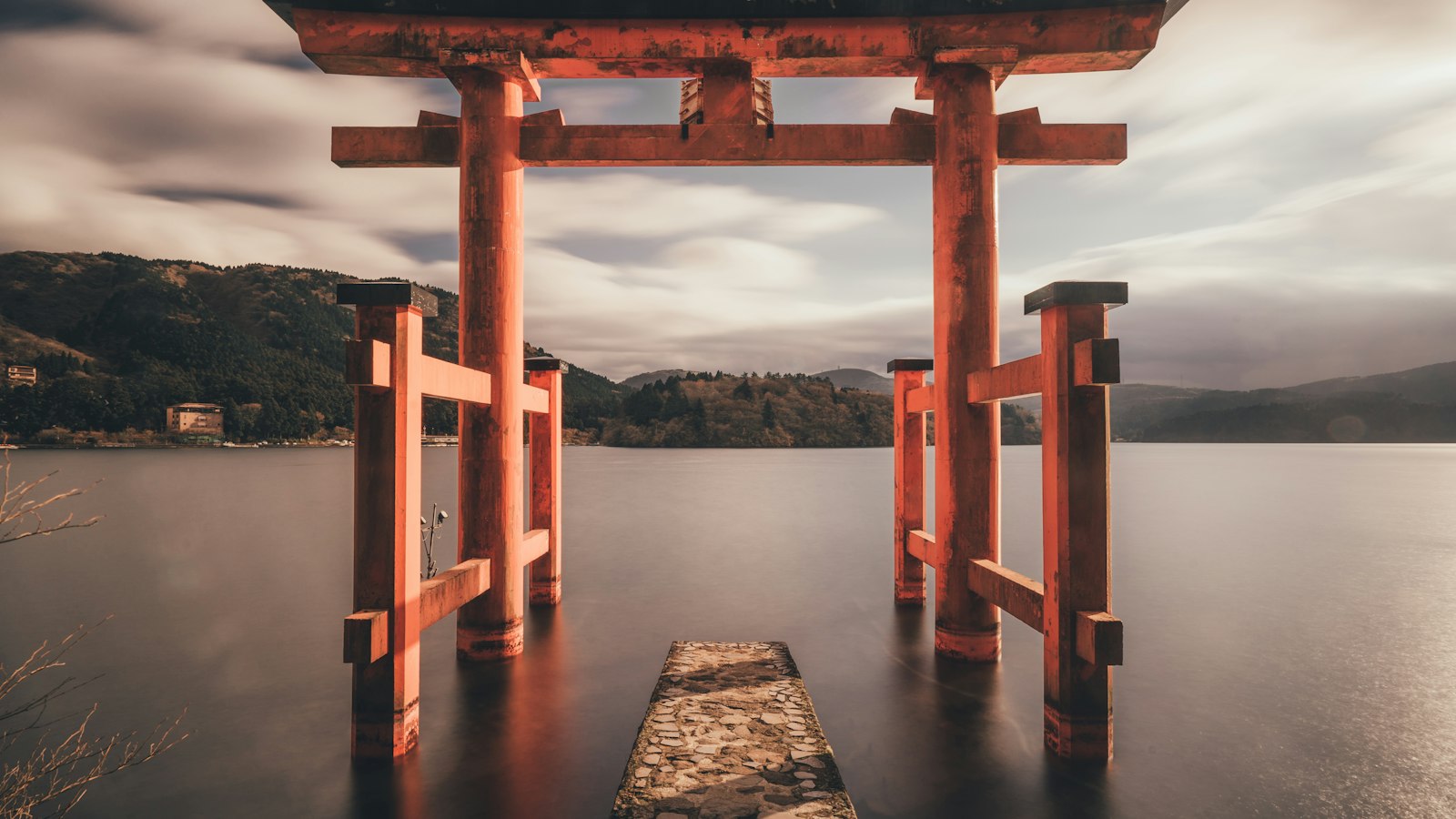
Hakone is the standard overnight escape from Tokyo: an onsen town in the mountains, reached in around an hour and a half, usually done as a loop of connecting transport rather than a single journey. It is also the first place in these guides where the terrain genuinely affects your signal, and one of the few where being offline is actually part of the experience.
Quick answer
- Whatever covers your Tokyo stay if Hakone is an overnight from Tokyo, and plans are nationwide
- An offline map of the loop if coverage thins between the stations, on the ropeway and around the lake
- Individual connections if the loop runs on timed connections and anyone who gets separated needs to check them for themselves
- A plan to be out of contact for an hour if you are going into the onsen, where a phone cannot follow
The loop is the itinerary
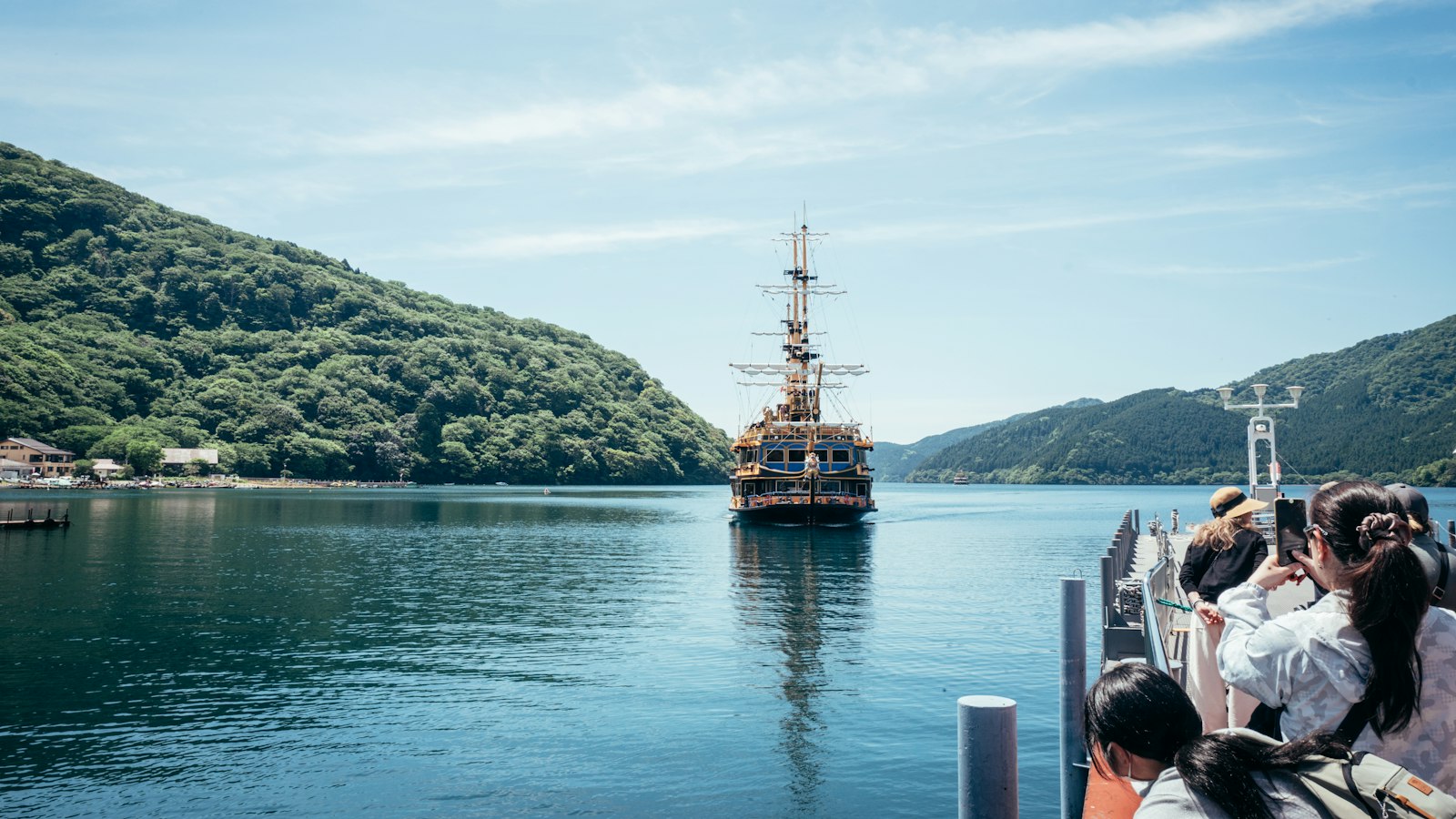
Most visitors follow some version of the same circuit: a train up from the Tokyo side, a mountain railway that winds its way up the slope, a cable car, a ropeway over the volcanic valley at Owakudani, and a boat across Lake Ashi, before coming back down.
Two consequences for connectivity.
First, you change vehicles repeatedly, often on a timetable, in places where the next departure is not always obvious. That is a lot of small lookups over a day, and it is the one thing you actively want working.
Second, you are moving through mountains. Coverage is reasonable at the stations, the built-up areas around Gora and Hakone-Yumoto, and along the lake. It thins in the valleys between them, on the ropeway span, and wherever a ridge blocks the signal. None of this is primarily a provider problem — the terrain is the constraint — but it does mean you should not plan a day that depends on being reachable at an arbitrary point on the loop.
Download an offline map before you go up. It costs nothing and covers the stretches where live navigation stutters.
Ryokan, onsen, and deliberately switching off
Hakone is onsen country, and the accommodation is often a traditional ryokan rather than a hotel. Two practical points follow.
Phones do not belong in the bathing area. Treat that as a rule even if a property does not post it explicitly, and the same applies to photography. Where you leave the phone while you bathe varies by property — some changing rooms have lockers, others only open baskets — so check your ryokan’s own site if you would rather not leave valuables out. Plan to be uncontactable for that hour, and tell whoever you are traveling with rather than leaving them wondering.
Ryokan Wi-Fi varies considerably. Newer properties are fine; older ones may have a weak signal in guest rooms even when the lobby is well covered, because the buildings are old and often wooden with thick walls. Treat house Wi-Fi as a bonus. Your own connection is the reliable one.

Mobal
Priced by the exact day, so an overnight from Tokyo pays for the days it uses
940+ customer reviews, mostly positive
What to buy
Nothing specific to Hakone. Japanese tourist plans are nationwide products sold by duration, so whatever covers your Tokyo stay covers this trip too. If Hakone is an overnight in the middle of a Tokyo week, size the plan to the week.
| Party | Typical answer | Cost |
|---|---|---|
| Solo | One tourist eSIM | ¥3,850 for 7 days |
| Couple | Two individual eSIMs | ¥5,500 for 5 days |
| Family of 4 | One shared pocket Wi-Fi router | ¥8,558 for 7 days |
One caveat for the shared-router option here specifically. A router works for people standing near it, so anyone who gets separated during the day cannot look up the next departure for themselves. In a city that is a minor annoyance. On a loop of timed connections, with patchy coverage between the stops, it is worth a little more thought. See our Tokyo guide for the full comparison, since that is where most Hakone trips are based.

Sakura Mobile
Pocket Wi-Fi or a physical SIM if a phone cannot take an eSIM
1,402 customer reviews, mostly 5-star but with some complaints
How much data a Hakone trip uses
A reasonable rule of thumb is around 1-1.5GB per person for the day. Light on volume, heavy on the moments that matter. The constraint is reliability at a handful of transfer points rather than the size of the allowance, and battery matters more than usual because you are out all day and moving.
Frequently Asked Questions
Is coverage a problem on the Hakone loop?+
Reasonable at the stations and around Gora, Hakone-Yumoto and the lake, and thinner in the valleys between them, on the ropeway span and behind ridgelines. Download an offline map before you go up.
Can I use my phone in the onsen?+
No. Phones do not belong in the bathing area, and neither does photography. Treat that as a rule even where a property does not post it explicitly. Where you leave the phone varies — lockers at some properties, open baskets at others — so check your ryokan's site. Plan to be uncontactable for that hour and tell whoever you are traveling with.
Is ryokan Wi-Fi reliable?+
It varies. Newer properties are fine; older wooden buildings can have a weak signal in guest rooms even where the lobby is well covered. Treat house Wi-Fi as a bonus.
Guides for the trips Hakone sits inside
Most Hakone visits are a day or a night out of a longer stay, so the plan you buy is the one covering that stay.
Tokyo 3 Days Business Trip: Best eSIM Options
For a short Tokyo business trip, reliability and zero setup friction matter more than saving a few dollars — here's the eSIM approach that gets you online the moment you land.
Updated July 28, 2026
Tokyo 5 Days Couple: SIM/eSIM Guide
Shinjuku and Shibuya separate couples for real, not hypothetically. Why each of you wants your own connection in Tokyo, what it costs against a shared router, and the Kamakura day trip.
Updated September 12, 2026
Tokyo 7 Days Solo Traveler: Best SIM/eSIM Options
How much data you actually need for a solo week in Tokyo, and which SIM/eSIM plans fit that usage without overpaying.
Updated July 28, 2026
Tokyo 10 Days Family of 4: Connectivity Guide
Ten days is long enough that older kids will want an afternoon on their own — the one thing a shared router cannot support. Plus the 7-vs-30-day rental pricing trap.
Updated September 12, 2026
Tokyo to Osaka 10 Days Family of 4: Connectivity Guide
A two-city family trip turns on one day: the Shinkansen transfer with luggage and children. Oversized bags need a reservation, and a rented router has to get home somehow.
Updated September 12, 2026
Japan 14 Days Multi-City Backpacker: Data Plan Guide
For a 14-day multi-city Japan backpacking trip, a longer-validity eSIM with a generous data cap beats juggling multiple short-term SIMs between cities.
Updated July 28, 2026